uMoya: The Sacred Return of Lost Things


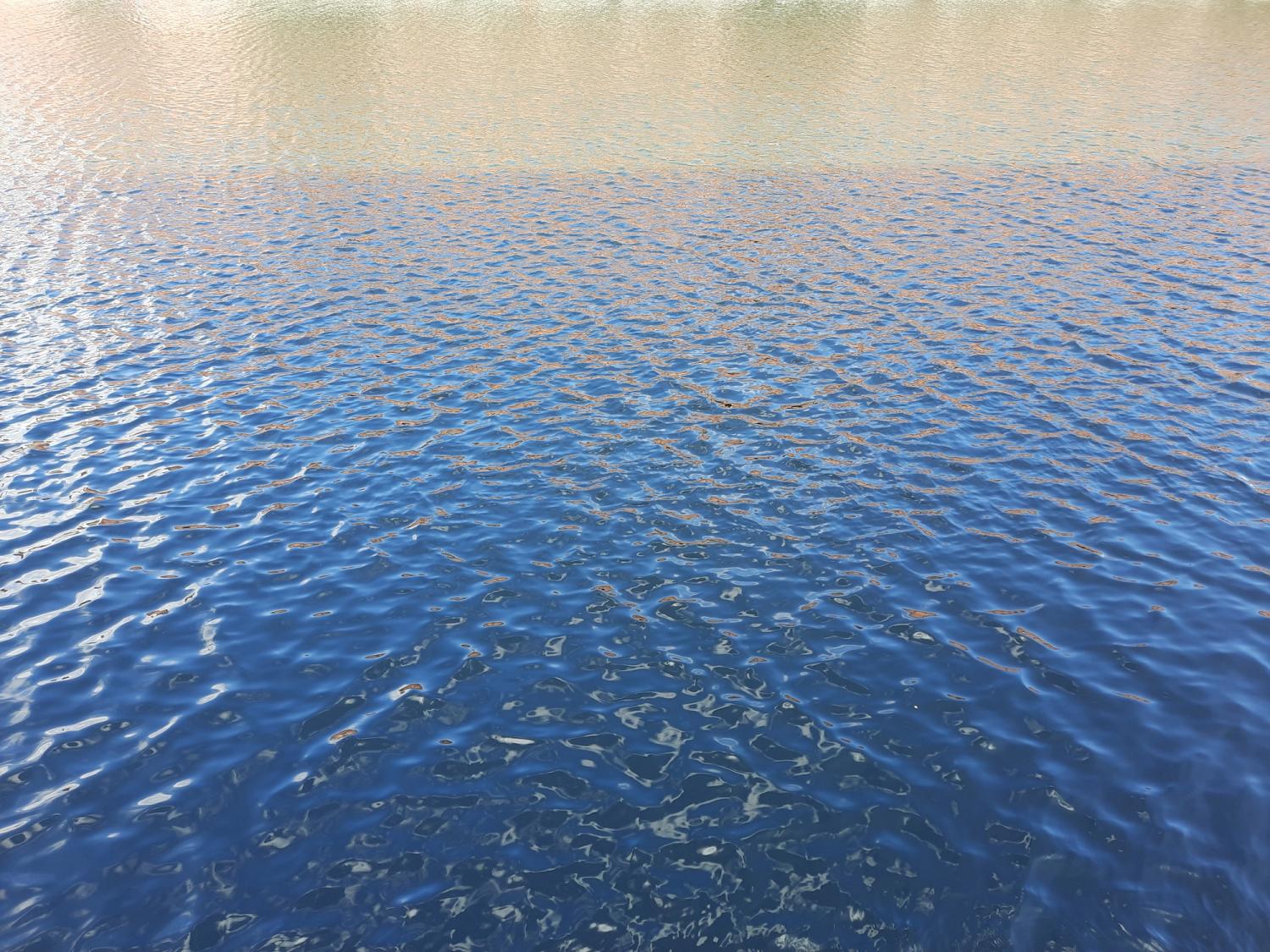
I want to take you round Liverpool on a breath. The breath is uMoya, a word from the isiZulu language meaning spirit, wind, breath. It whispers in lonely corners, blows in waves from the harbour, and is held tightly in uncomfortable silences. It is also the name of the 12th Liverpool Biennial – uMoya: The Sacred Return of Lost Things.
As I leave Liverpool Lime Street station, a large gust of wind catches me. It drives me away from the city centre, past the regenerated waterfront and deposits me carelessly in front of the ‘festival hub’: Tobacco Warehouse, the largest brick warehouse in the world. Multitudes of tiny bricks in uniform stacks tap out the persistent rhythm of large-scale industry. The curator of the biennale, Khanyisile Mbongwa, says that ‘this Biennial represents a state of remembering’ and the lively breeze that brought me here – past Oil Street and Cotton Street – certainly seems to whisper memories of rum and tobacco, the kind of cargo it used to deliver from across the seas into Stanley Dock.
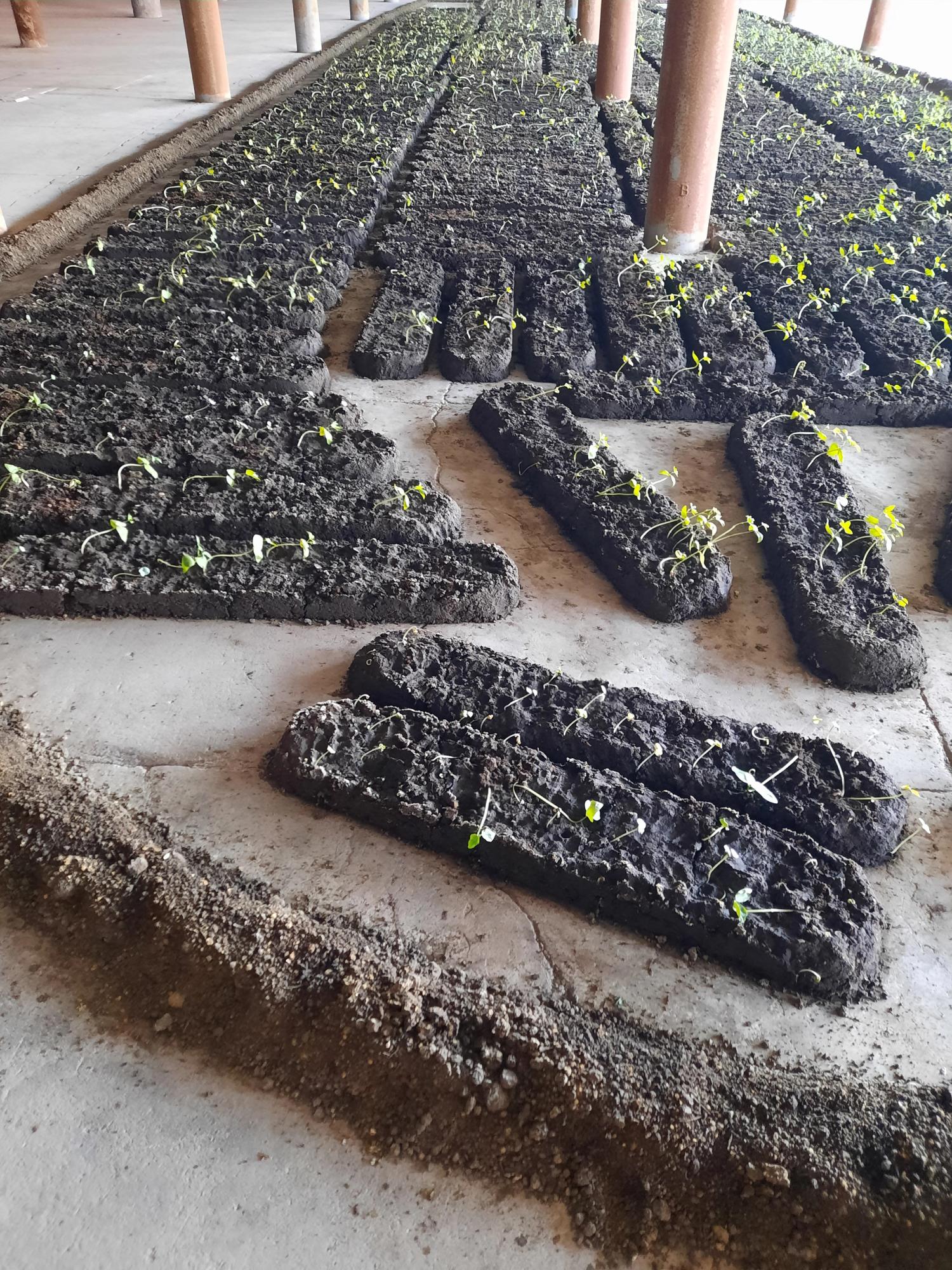
I enter the warehouse and the wind is left outside, flapping against the windows, and new voices take over. Chorus of Soil, an installation by Binta Diaw, plays out passages from M. NourbeSe Philip’s poem ‘Zong!’ read by local residents. Set in 1781, it tells the history of the slave ship Zong and the 130 captive Africans who were purposefully thrown overboard and drowned to enable the enslavers to claim these ‘losses’ against their insurance. The voices are sombre in the dead air of the warehouse, each word taken and repurposed from the 1783 case report that declared the massacre to be legal. Carefully arranged mounds of soil form the rest of Diaw’s installation, shaped like recently filled, unmarked graves. Together they create an almost full-scale replica of the Brooks slave ship image. The large installation suddenly feels small, much too small, each grave now identified as one breathing, captive body. From the soil mounds unfurl seedling plants, tiny promises of renewal somehow finding a way to survive despite being rooted in overwhelming misery and violence.
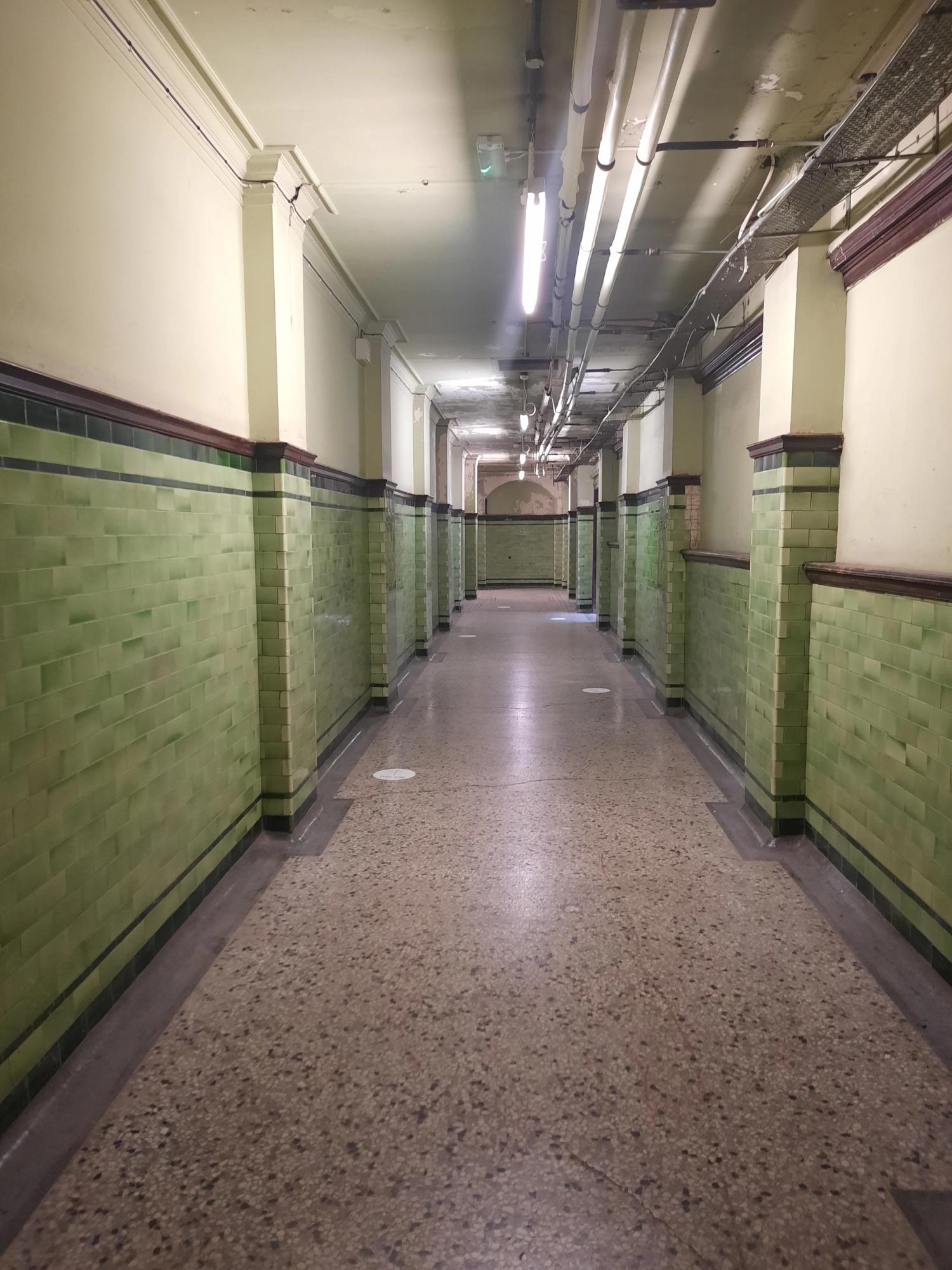
I manage to catch my breath back out in the blustery air, which feels heavier than before, and walk back into the city towards the former Cotton Exchange. Built in 1907, the building now feels still and quiet, like the air has been breathed by many lungs and then lingered undisturbed for a few decades. I descend into its depths along corridors covered in shiny avocado-coloured tiles. The works placed down here in the basement speak to the stories of specific landscapes. Sepideh Rahaa’s video Songs to Earth, Songs to Seeds elevates my already-fierce love for rice, following the year-long cycle of its cultivation in Northern Iran through the stories and songs of the women who farm it. It feels quite dystopian to watch lush footage of Iranian paddy fields from inside a concrete basement in Liverpool. Down here, the landscapes feel controlled and curtailed by the windowless structure around them.
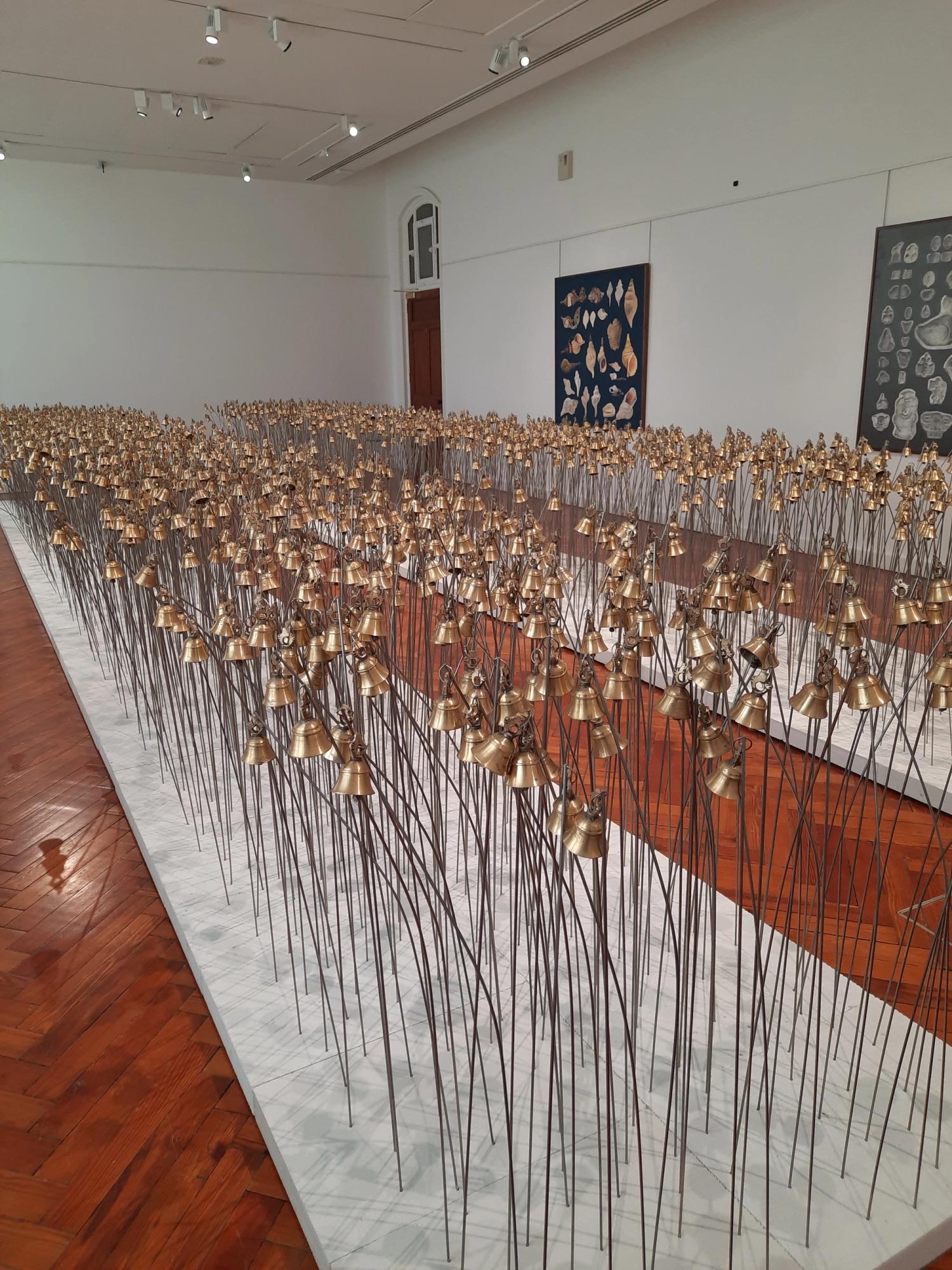
Another part of the biennial has been snuck into an upstairs corner room of the Victoria Gallery and Museum, which houses the University of Liverpool’s art collection. In Antonio Obà’s Jardim, brassy bells grow on the ends of long metal stalks. They are begging to be touched, for the wind to sway them and release joyful ringing. I walk among them and fulfil their request, grazing the bells with my fingertips and releasing their small rounded tunes. The accompanying text says that by touching the bells I am sounding an alarm that will reveal my location. And yet nothing changes. I am still alone and I wonder whether these metal plants really want to be outside, permanently set free by the promise of a coastal breeze.
As I head towards my next stop, I play one of the biennial’s meditative audio tracks created by culture and wellbeing practitioner Louise Thompson. The voice encourages me to be present as I walk around the city, to feel the pavement below my feet. I concentrate on my breath, the familiar smells of car exhaust and frying meat and the nip of cold sea air right at the back of my nose. The best way to experience this biennial, I realise, is in the spaces in between: travelling to and from venues, descending stairs into disused basements, crouching by sculptures in a public park. The biennial, the guidebook says, explores the potential of people and objects ‘to manifest power as they move across the world’. The best of the art shown here will also travel with you, infusing the city with its spirit, carried between points on a map like a seed pod caught by the wind.